Background:
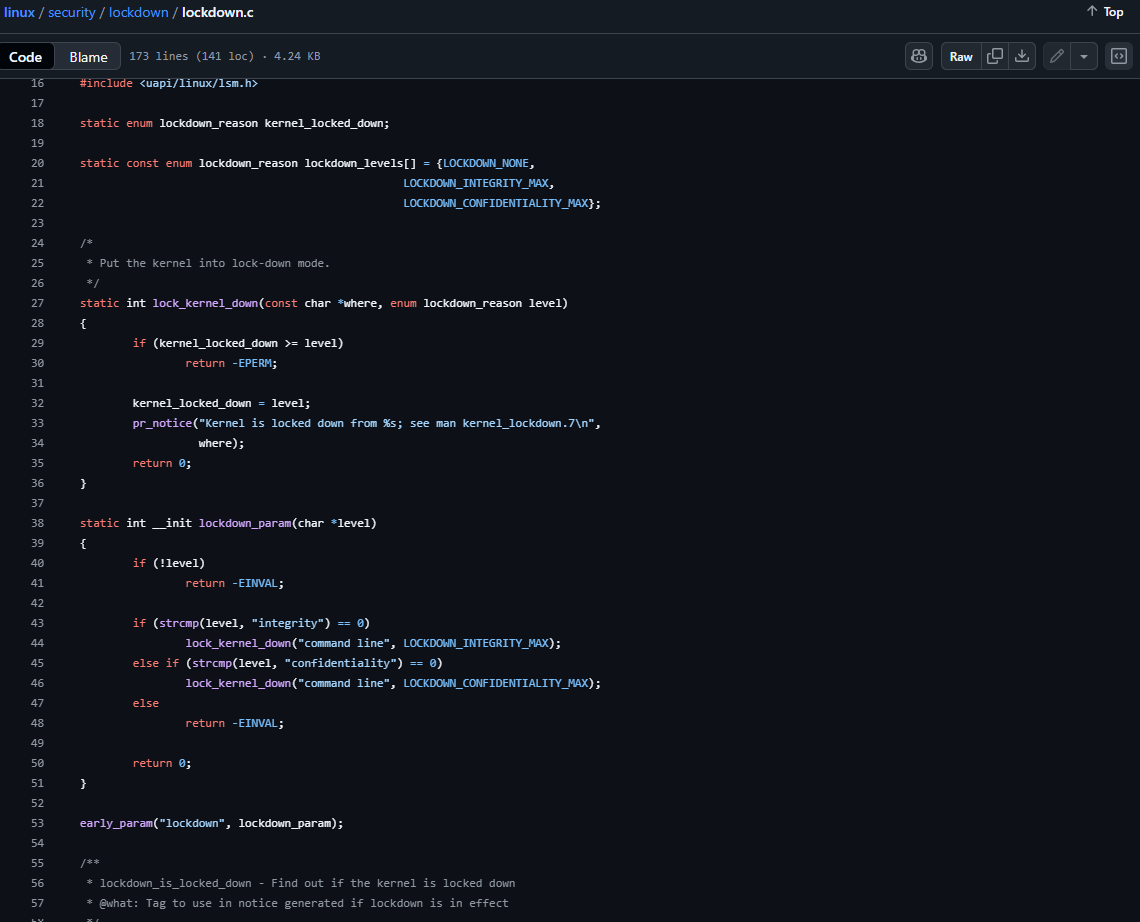
The Linux kernel lockdown mode was introduced in Linux kernel version 5.4. Its purpose is to help protect the kernel from actions that could compromise the confidentiality or integrity of [...] Read more
Background:
As we continue our journey into the mechanisms of kernel protection toolsets and monitoring, let's focus on our next candidate: SLUB. In simple terms, SLUB (the Unqueued Slab Allocator) [...] Read more
Background:
As we continue our discovery of Linux kernel protection mechanisms, we should also look at the built-in capability called Kernel Address Space Layout Randomization (KASLR). KASLR’s [...] Read more
Background:
In our previous article, I described one method to prevent or monitor harmful activities that can be carried out against the Linux kernel, focusing on the research of SELinux [...] Read more
Background:
Some XDR and EDR solutions are not effective when dealing with threats hidden inside WSL. In certain cases, it can also be challenging for digital forensic specialists to detect threats [...] Read more
Background:
In my recent articles, we discussed a lot various supply chain attack scenarios. This led me to think about a new type of supply chain attack, specifically targeting Linux package [...] Read more
Background:
Sometimes, as an organization grows, it needs to hire specialists for remote work. However, you can never be certain whether the person standing opposite you is an impostor attempting to [...] Read more
Background: In our previous article, we discussed and compared various tools that facilitate the acquisition of volatile memory . In this article we are going to cover final part of our challenge to [...] Read more
Background:
Recently, some unknown specialists uploaded several dumps from servers that, according to their claims, are related to Kimsuky (State sponsored) systems. As cybersecurity defenders, we [...] Read more


![Linux Volatile Memory Forensics: Key Caveats in Acquisition and Analysis [PART 2 Final]](https://threat.boutique/content/images/20250817093533-ban.png)