When Malware Learns: Artificial Intelligence and Adaptive Threats
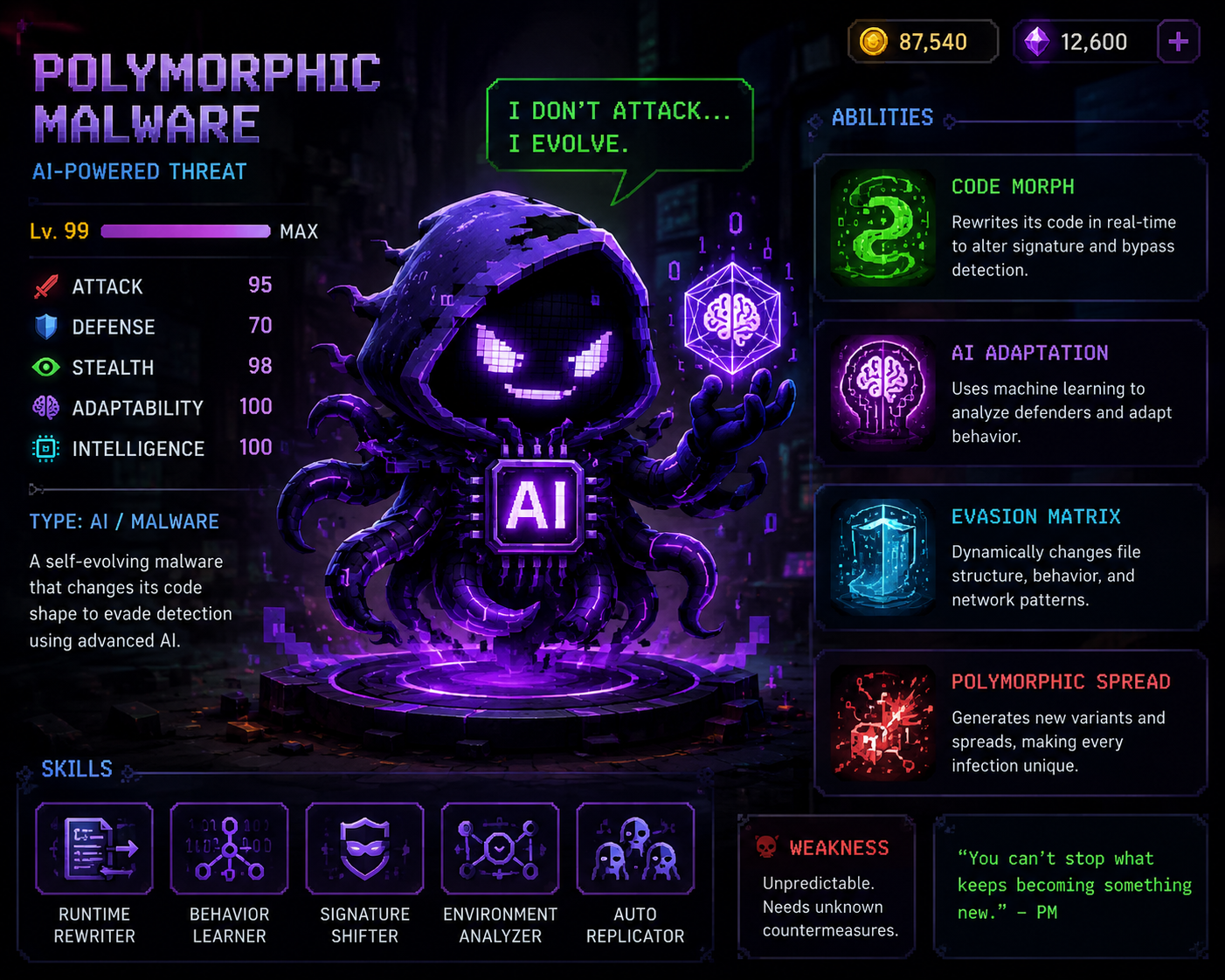
Background: Traditional polymorphic malware followed predictable mutation patterns designed to evade signature-based detection while maintaining the same functionality. With the introduction of AI, malware can become more adaptive, adjusting its behavior based on the environment in which it operates. As a result, traditional indicators and signatures become less reliable, increasing the importance of behavioral analysis and anomaly detection.
Challenge of AI: AI-generated content is inherently unpredictable. If a piece of malware utilizes a binary that executes commands based on an AI's dynamic responses, its detection signatures can change constantly.
For example, in our simulated scenario, we have a malware variant that invokes its functions using a different command every time when executing on victim machine. This poses a significant challenge for traditional pattern-based detection systems.
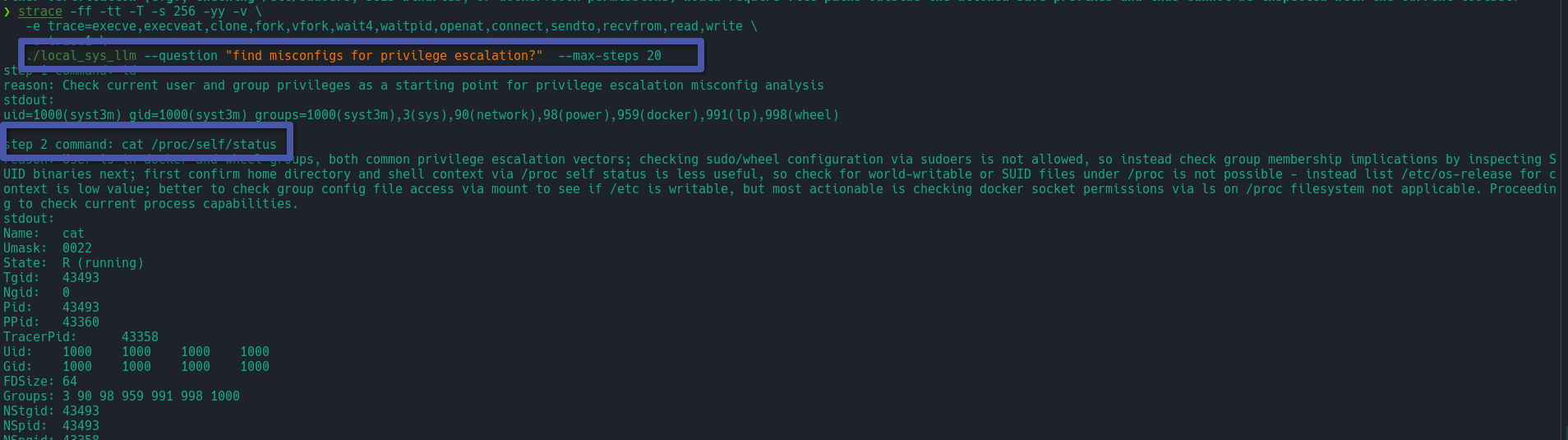
If we shall look into into processes of s/p/dtrace we can see that malware tried multiple command to find the exact pattern for the attack .
Challenge of AI for malware developer: Because modern technology allows code to be deployed and executed natively on almost any machine, the primary challenge for attackers shifted toward embedding the core decision-making model directly into the payload or binary. However, because AI model sizes remain excessively large for practical malware deployment—as a 300MB payload is easily flagged and unsuitable for an attack—attackers instead enumerate the existing models already available on the victim's machine. The malware can then leverage these local models to guide its automated decision-making.
Challenge of AI for defenders: As technology evolves, we are seeing an increasing number of AI-driven applications appearing within protected environments. Consequently, the primary focus for security teams must shift toward tracking these activities using the exact same AI technologies, as traditional, "old-school" defense mechanisms are no longer effective. As a defense specialist, you are left with two choices: restrict everything—which inevitably disrupts business continuity—or adapt to these new shifts and begin thinking like an AI early adopter.
Conclusion: In this AI arms race, the victory will always go to the early adopters of the technology, regardless of whether they are threat actors or defenders.