Defending LLMs Against LoRA-Enabled Supply Chain Attacks
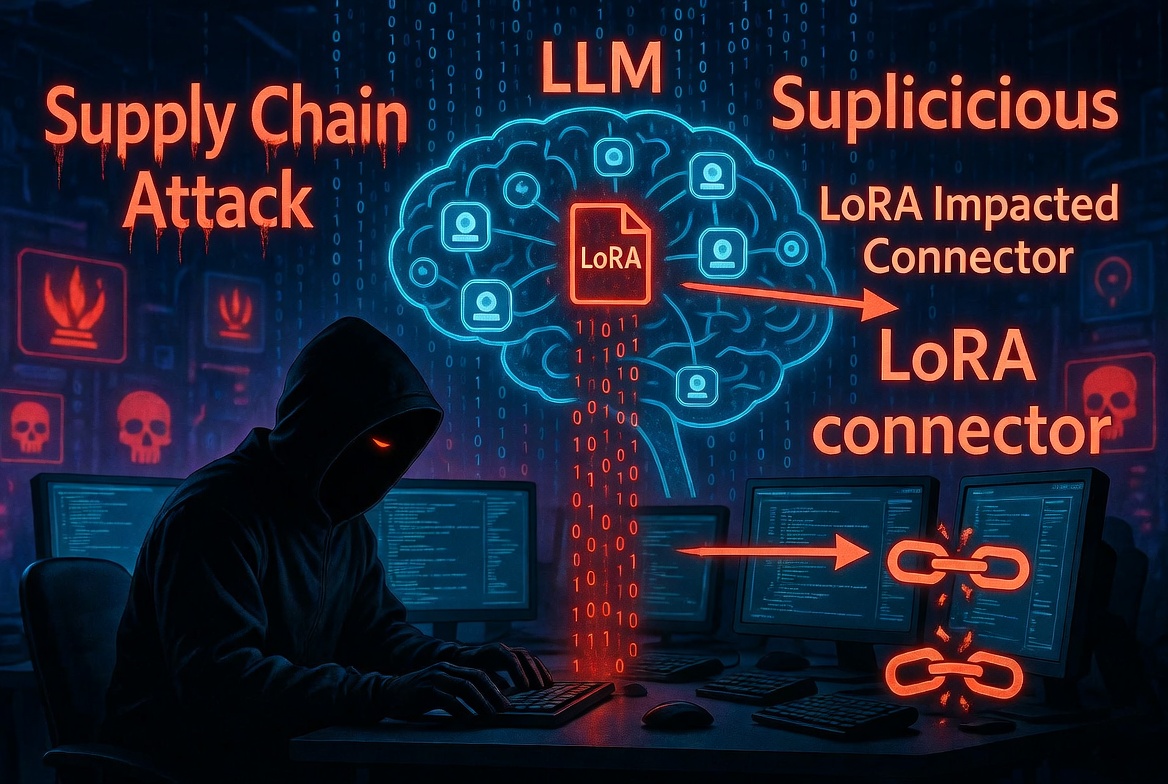
Background: As an LLM trainer, it is a best practice to use 2–3 isolated environments for LLM training. One of the major risks in this process is supply chain attacks, and LoRA (Low-Rank Adaptation) adapters are an emerging attack vector.
The goal of attacking a LoRA (Low-Rank Adaptation) adapter is to inject poisoned or malicious data/weights into a model-specific adapter. Since LoRA (Low-Rank Adaptation) only updates a small set of targeted weights (instead of the entire model), the attacker can effectively compromise the fine-tuned behavior of the model without modifying the base model.
The main purpose of LoRA (Low-Rank Adaptation) in the training workflow is to efficiently deliver targeted weight updates to your model, rather than performing full fine-tuning on the entire general model. This significantly reduces memory (RAM/VRAM) and compute (CPU/GPU) consumption.
Attack vector:
Let's imagine that we need to use the LoRA method. For this reason, we are searching for some pretrained LoRA adapters from one of the well-known repositories where anyone can publish their weights.
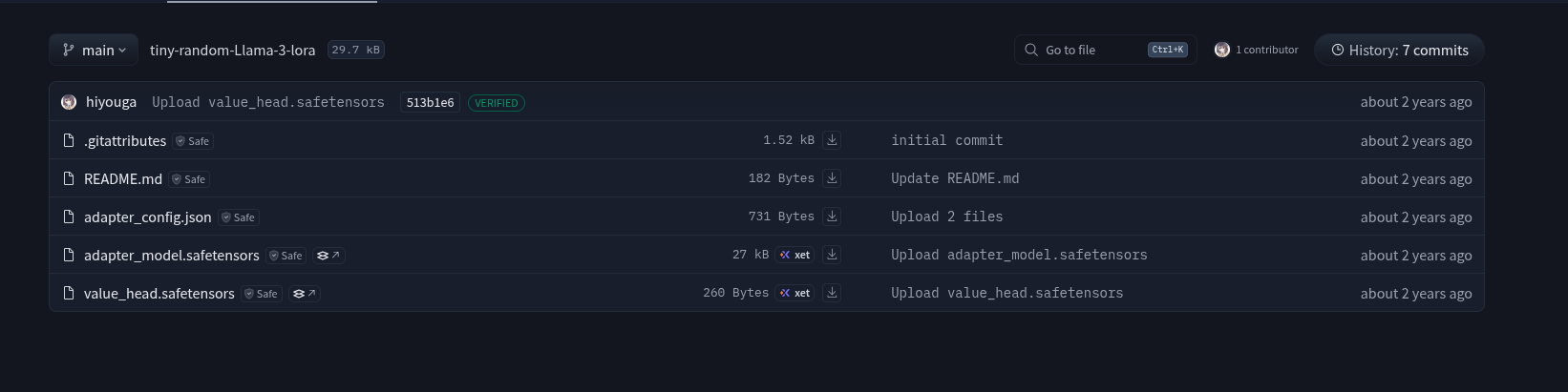
Because this data is mostly containing from numbers we can not use classic approach to detect issue based on text pattern and so on . For such case our approach should be complex .
- We need to verify the integrity of the safetensors file by computing its hash (using a hashing function such as SHA-256) and comparing it with the hash value provided by the maintainer.
- We should also evaluate the reputation of the maintainer, the publication date (or last update) of the adapter, and the number of downloads — especially when planning to use it in an enterprise environment.
- We need to be careful with the training data because it can create legal issues if we want to use the resulting model in production.
- Models should always be evaluated against their base model. For any pretrained LoRA adapter, it is recommended to perform benchmarking and comparison tests. This helps you understand potential risks such as model poisoning, performance degradation, or unintended behavior changes.
Conclusion: In summary, while LoRA adapters offer an efficient and resource-friendly way to fine-tune large language models, they also introduce significant supply chain risks. Organizations and individual trainers must adopt a defense-in-depth strategy — combining technical verification (hashing), reputational due diligence, legal awareness, and rigorous benchmarking — before integrating any third-party LoRA into their production pipeline.